Slo-pitch is the friendliest ball game there is to start: the pitch comes in slow and high, nobody needs a helmet in the field, and the team down the bench will lend you a glove. But if you’re playing a full season, a little of your own gear makes it a lot more fun. Here’s what a player needs, what the captain brings, and what to check with your league before you spend anything.
The short list
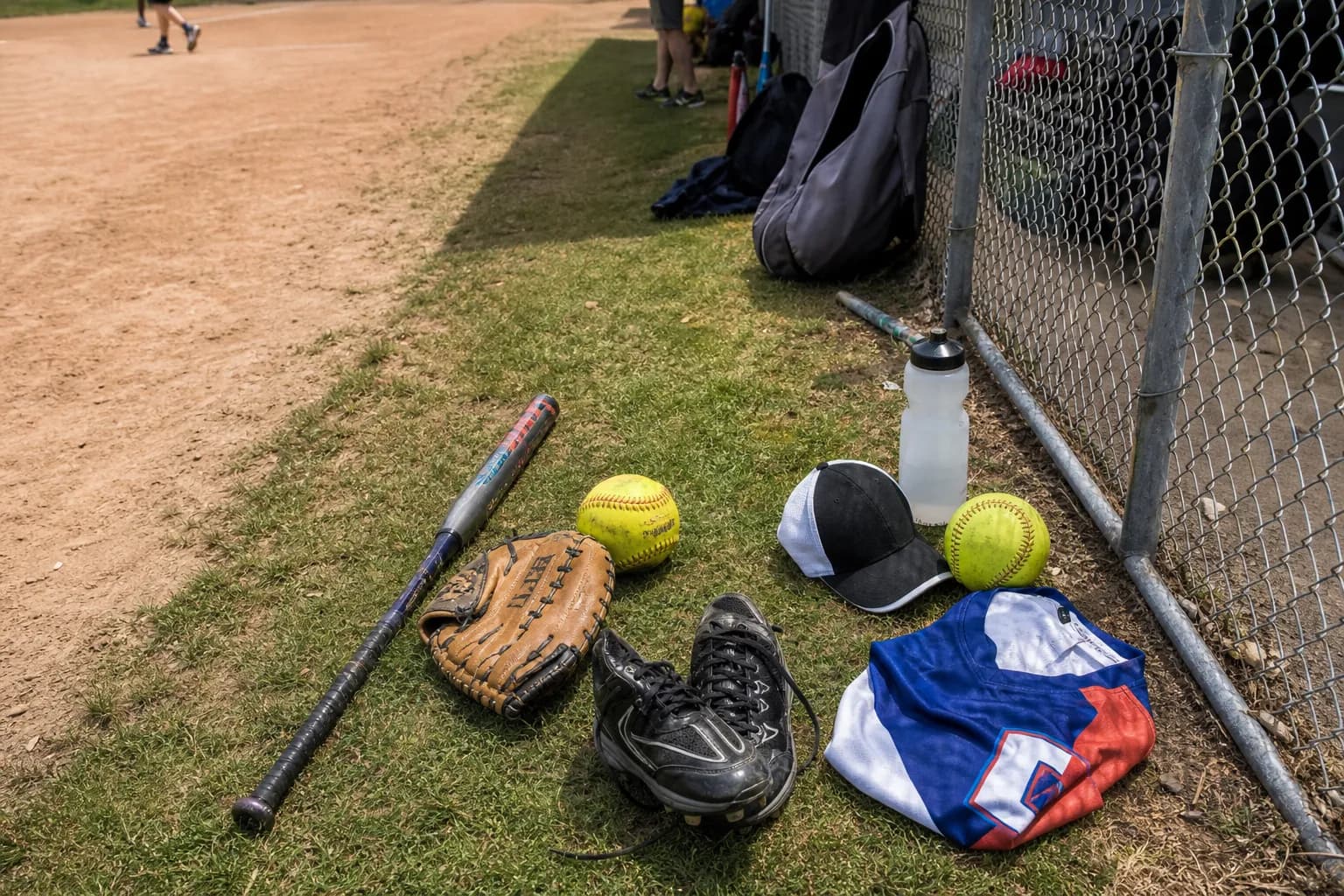
- A glove sized for a softball (12.5 to 14 inches)
- Cleats with molded rubber or plastic studs, or running shoes
- Something to wear: a team jersey, and shorts or pants you can slide in
- A bat (optional: most teams share)
- Water, sunscreen and a hat
The ball
Slo-pitch uses a big softball, usually 12 inches round and optic yellow with red stitching, so it’s easy to see against the sky. Most adult and coed leagues use the 12-inch ball; some women’s leagues use an 11-inch one. Leagues usually supply the game balls, but a bucket of practice balls in the team bag means you can warm up without borrowing.
Gloves
Because the ball is bigger than a baseball, you want a glove made for softball: a deeper pocket, and a little longer. As a rough guide:
- Infield: 12.5 to 13 inches, so you can get the ball out fast
- Outfield: 13 to 14 inches, for the extra reach on a fly ball
- First base: a first-base mitt if you play there every week, otherwise your usual glove
- Pitcher: whatever you like, plus a mask if your league requires one (many do now)
A new leather glove needs breaking in: play catch with it a few times before the first game, and don’t leave it baking in the car between games.
Bats, and the stamp your league checks
Slo-pitch bats are their own thing: longer and lighter than a baseball bat, built for a big ball coming in slow. Most leagues keep an approved-bat list or require a certification stamp on the barrel, and an umpire can pull a bat that doesn’t have it. So before you buy:
- Ask your league or check its rules for the approved bats or the stamp required.
- Try a teammate’s bat for a few games before you buy one.
- Pick a weight you can swing late in a doubleheader, not just in the first inning.
Plenty of players never buy a bat. If your team shares two or three, you’re set.
Shoes and cleats
Molded cleats (rubber or plastic studs) grip a grass outfield and a shale infield. Most rec leagues don’t allow metal spikes, so leave those for baseball. On a dry field, running shoes are fine for your first season.
What to wear
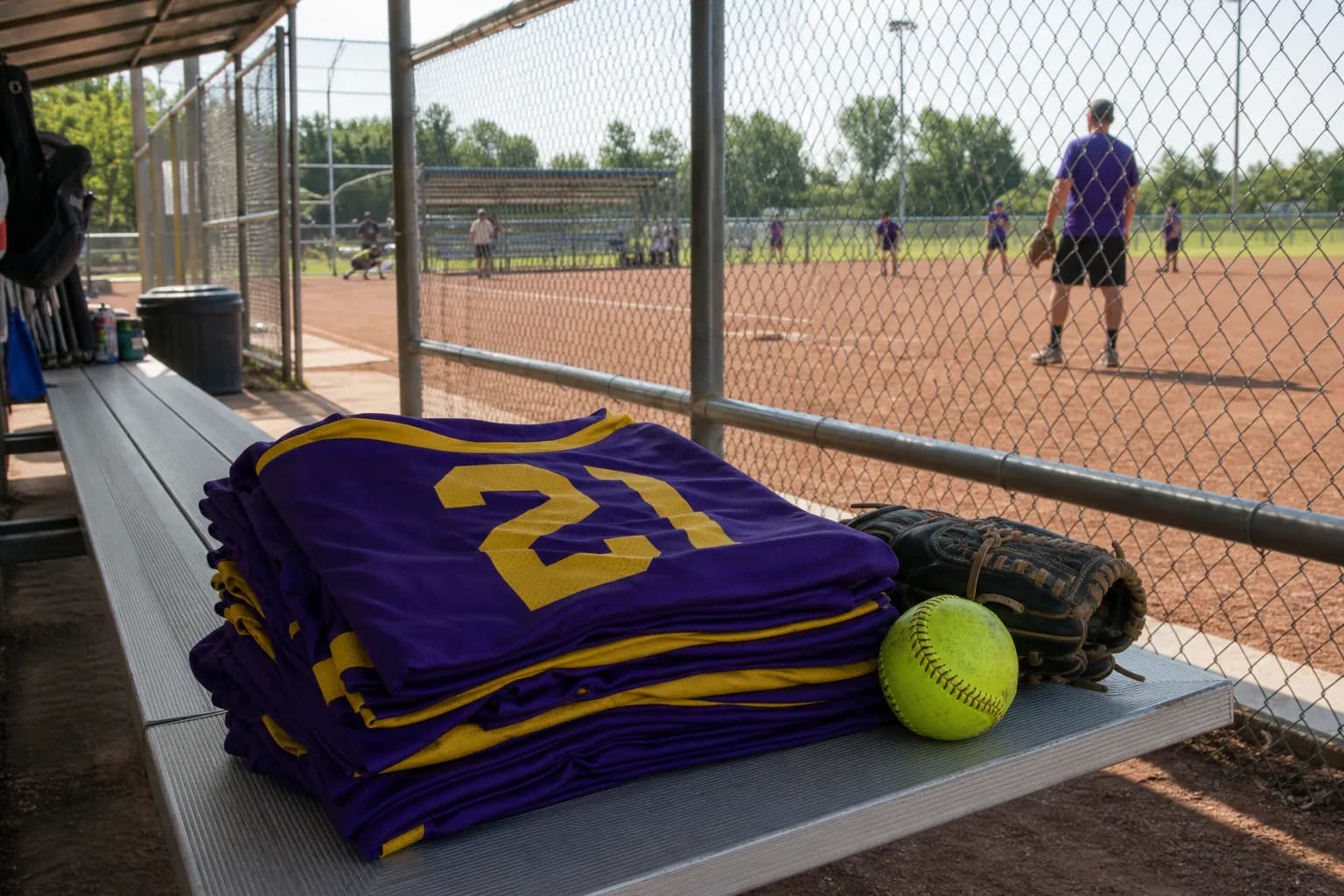
- A team jersey, so your teammates and the umpire know who’s on which side (more on that here)
- Shorts or pants you can slide in; sliding shorts or knee pads if you plan to slide a lot
- A ball cap or visor and sunglasses for the 1 p.m. game
- A long sleeve under your jersey for May evenings: it gets cold once the sun goes down
The captain’s team bag
If you’re the captain, these are the things the team will look at you for:
- A few practice balls and two or three team bats
- The lineup card and a pen (and a backup pen)
- A first-aid kit with instant ice packs: pulled hamstrings are the national injury of rec slo-pitch
- Water, a jug or a case of bottles
- Sunscreen and bug spray for the late game
- Spare glove for the ringer who forgot theirs
- A list of everyone’s phone numbers, in case you need a sub
What you can skip
Batting gloves, a bat bag that rolls, a catcher’s set and a $400 bat are all nice to have and none of them are needed for a rec league. Start with a glove that fits and shoes that grip, and play a season before you buy anything else.
And the jersey
Teams that play in matching jerseys look like they mean it, even when they don’t. Our jerseys come in five styles, with names and numbers included and no minimum order. Send us the team name and colours on the design form and the first design is free.